
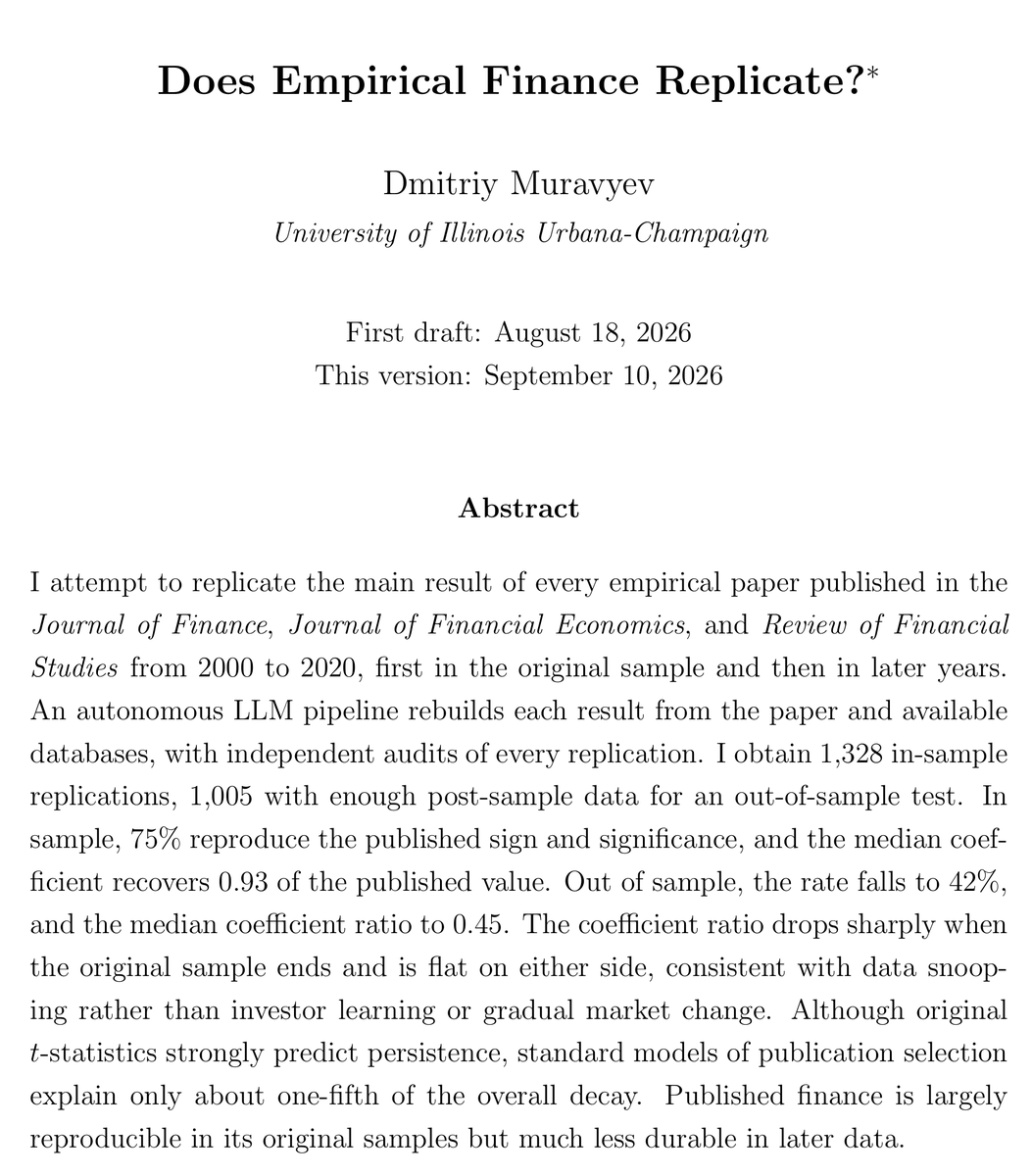
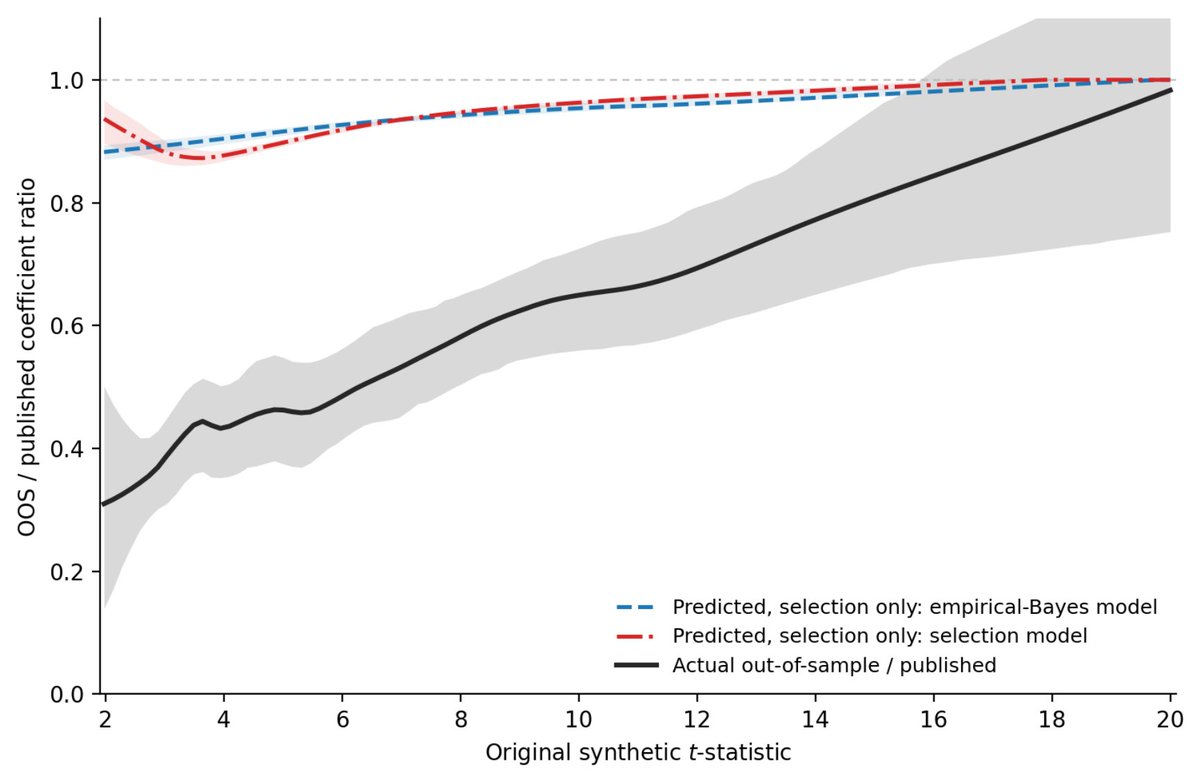
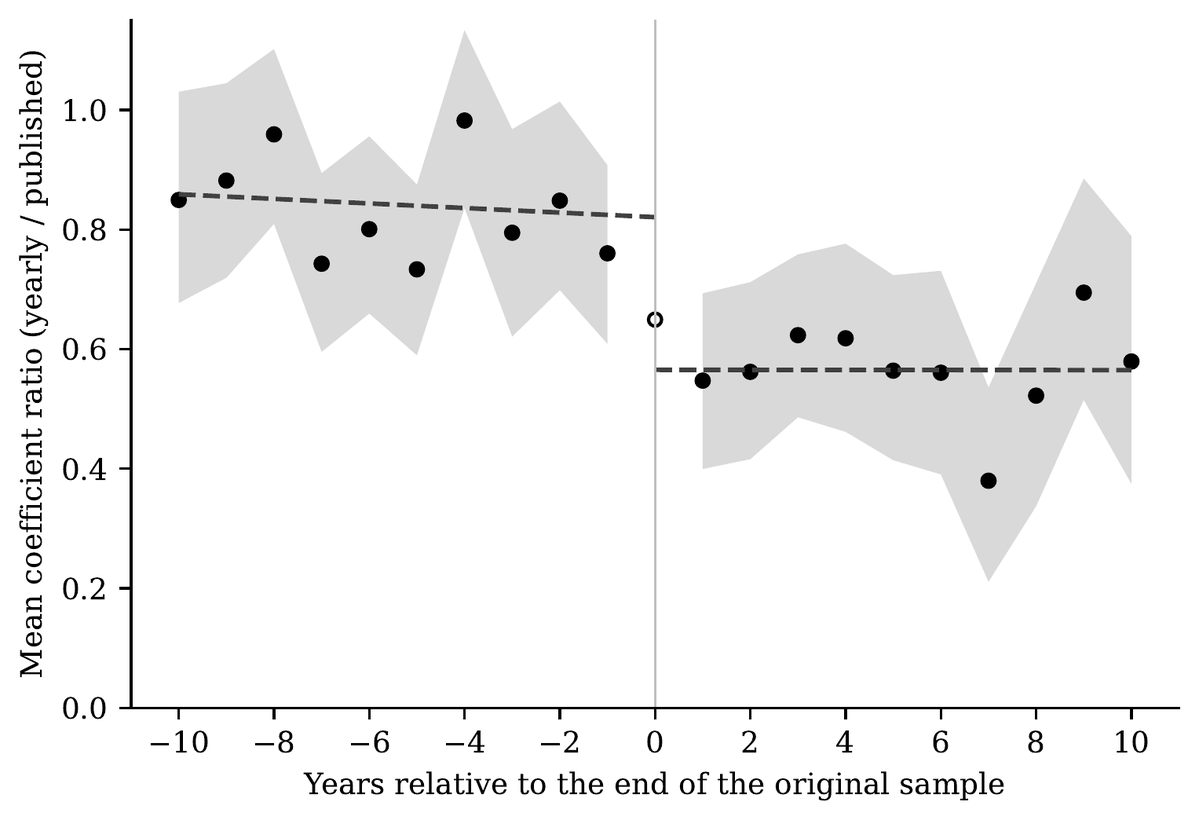
for years after their data ends. The typical one is 𝐫𝐨𝐮𝐠𝐡𝐥𝐲 𝐝𝐨𝐮𝐛𝐥𝐞 what you would see in new data. Fair caveat: markets, regulation and technology changed a lot after 2000, and the results were rebuilt by AI, so a weaker later result does not by itself prove the original work was wrong. His answer: the same code recovered 93% before the data ended and 45% after, and slow market change would not produce a sudden drop. Data snooping, markets changing, or investors trading the effect away. Which do you think explains the drop? #Finance #QuantFinance #AssetPricing #Investing #Research #ReplicationCrisis #Reproducibility #OpenScience #Econometrics #Statistics #DataScience #MachineLearning #AI #ArtificialIntelligence #LLM #Economics #FinancialEconomics #FinTech #HedgeFunds #CapitalMarkets Link to the paper: 📄 𝐃𝐨𝐞𝐬 𝐄𝐦𝐩𝐢𝐫𝐢𝐜𝐚𝐥 𝐅𝐢𝐧𝐚𝐧𝐜𝐞 𝐑𝐞𝐩𝐥𝐢𝐜𝐚𝐭𝐞? by Dmitry Muravyev Replication packages: I started a monthly digest that cuts out all the noise in #Quant Finance & #AI/#LLM research. Just the things that actually matter. Friends keep telling me it saves them a ton of time. Sign up here: Here are past issues if you want a peek: 📷 📷 📷
published
for years after their data ends. The typical one is 𝐫𝐨𝐮𝐠𝐡𝐥𝐲 𝐝𝐨𝐮𝐛𝐥𝐞 what you would see in new data. Fair caveat: markets, regulation and technology changed a lot after 2000, and the results were rebuilt by AI, so a weaker later result does not by itself prove t
$LINK
Open the original public source →
Latest documented BWB result
$META market result
I sold the $META $655 Puts 9/25 for $7.60
Historical results are not a promise of future performance. Trading involves substantial risk.This public post is a timestamped information archive, not personalized financial advice. Alerts can change as markets move. Join Billy's private group for the complete daily stream and follow-through.