
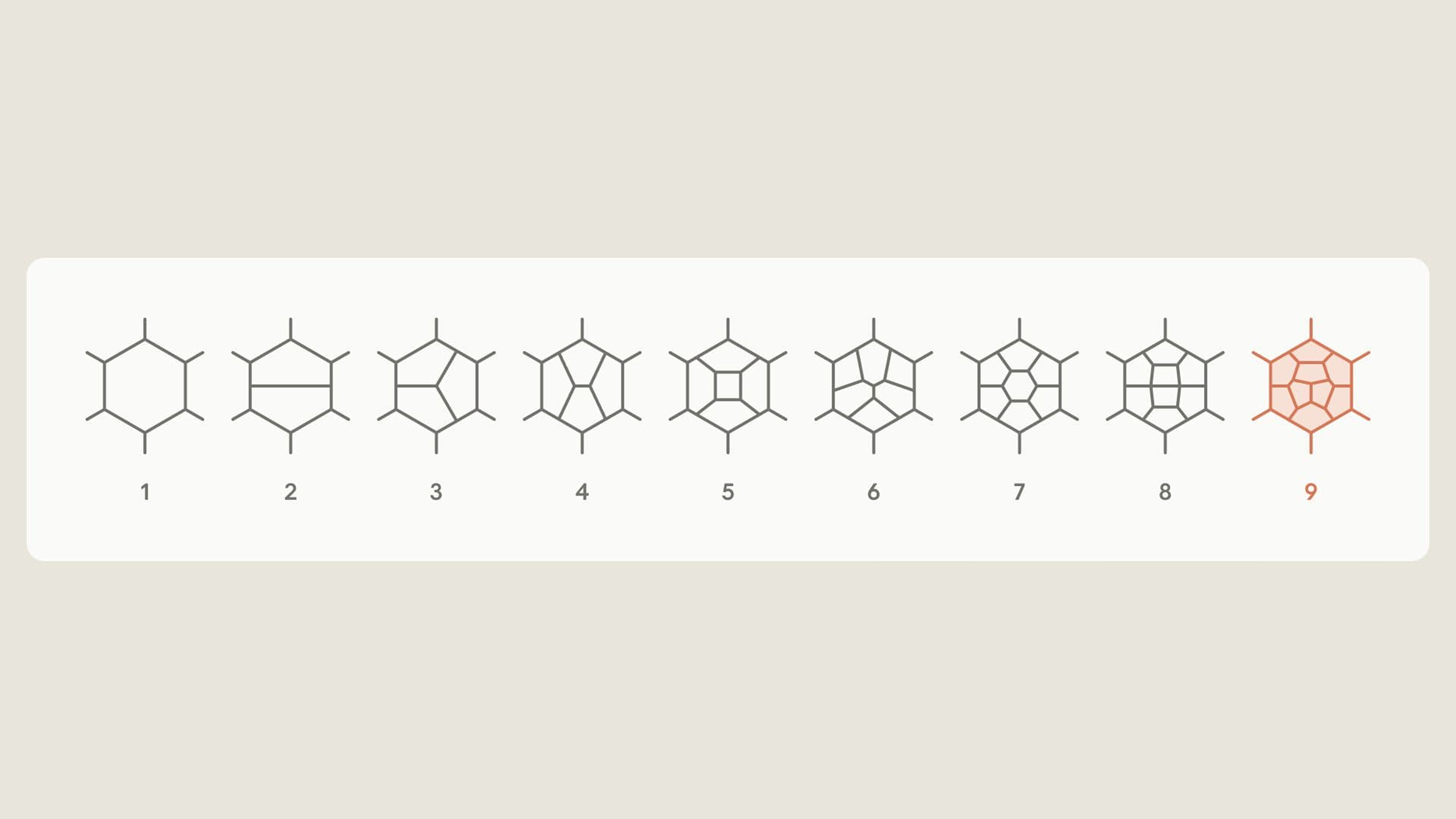
New on the Science Blog: Yes, Claude can do Nine Loops. Theoretical physicists predict how particles behave using formulas called scattering amplitudes. These are notoriously hard to compute, so researchers work with layers of increasingly fine corrections called “loops”—each added loop makes the answer more precise but takes exponentially more computation. Most calculations stop at two or three loops. Eight loops was the previous record in a simplified model physicists use as a testing ground (planar N=4 super-Yang-Mills), set by SLAC's Lance Dixon and collaborators. Last month, physicist and science writer @4gravitons issued a challenge: could an AI push past eight loops in this model, using only the compute budget an academic could reasonably access? Given a single prompt describing the nine-loop problem, Claude ran largely unsupervised for days in Claude Science and solved it using methods developed by Dixon and his colleagues, at a total cost of a few thousand dollars. Dixon independently verified the result, and von Hippel wrote about the experience for our blog. Read more: ↧ Claude gives us N=4 super Yang-Mills to nine loops Claude gives us N=4 super Yang-Mills to nine loops
published
New on the Science Blog: Yes, Claude can do Nine Loops. Theoretical physicists predict how particles behave using formulas called scattering amplitudes. These are notoriously hard to compute, so researchers work with layers of increasingly fine corrections cal
Open the original public source →
Latest documented BWB result
See Billy's timestamped results and follow-through.
Review the latest gains posts, original timestamps, and proof images published by Banking With Billy.
Historical results are not a promise of future performance. Trading involves substantial risk.This public post is a timestamped information archive, not personalized financial advice. Alerts can change as markets move. Join Billy's private group for the complete daily stream and follow-through.