
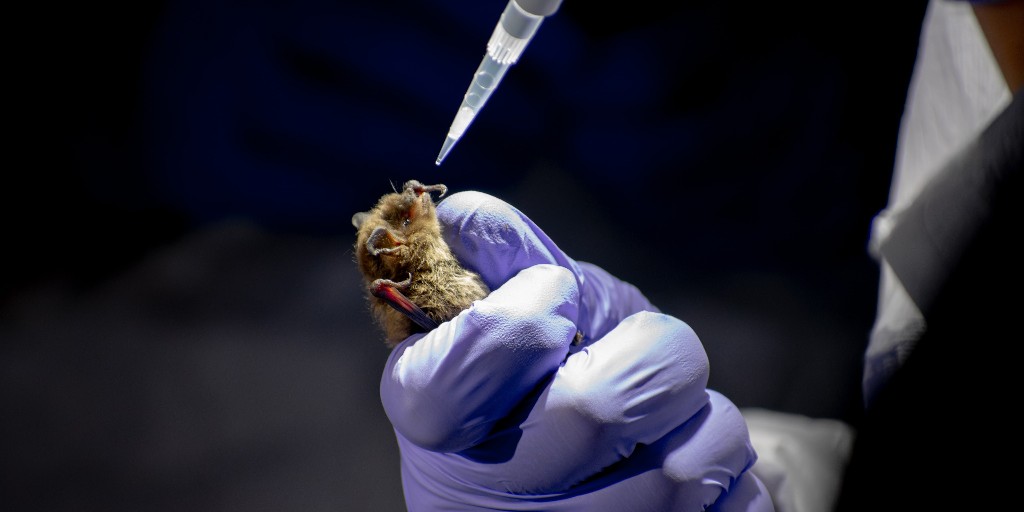
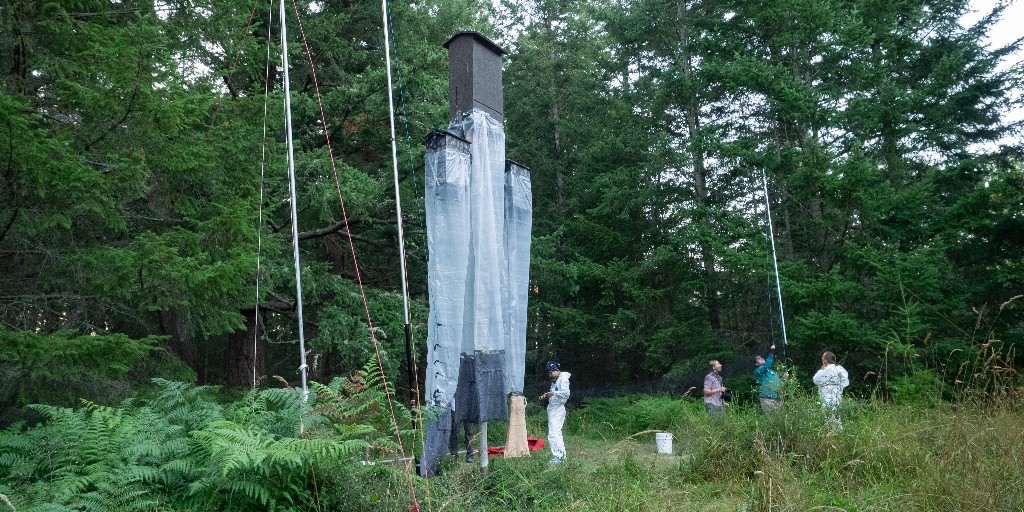
Going to bat for bats: A vaccine for white-nose syndrome 🦇 The USGS is playing a crucial role in the research and development of an oral vaccine for white-nose syndrome in bats. White-nose syndrome, which is caused by a fungus, has killed over seven million bats in North America. The unique vaccine development was spearheaded by research epidemiologist Dr. Tonie Rocke of the USGS National Wildlife Health Center. When Rocke first undertook the development of a vaccine for white-nose syndrome in 2015, few researchers had studied fungal vaccines. Now, a group of federal, state, and local scientists are inoculating bat colonies across the Western United States and studying the vaccine’s effectiveness. At English Camp in Washington State’s San Juan Island National Historical Park, scientists just vaccinated 450 bats, the largest such vaccination effort so far. Although white-nose syndrome was first discovered in Washington in 2016, it was only just found on San Juan Island. Scientists believe that for the bat colony to survive, it’s crucial to catch the outbreak early. The effort to inoculate bats against white-nose syndrome is not confined to English Camp. Scientists plan on vaccinating bat colonies in California, Montana, and another colony in Washington. They will continue to monitor the colony on San Juan Island and plan on vaccinating next year’s brood, hoping that this intervention will preserve the colony. Read the full story: 📸 1: A scientist holding a bat uses a pipette to administer a vaccine. Credit: Sophia Hammerle, NPS 📸 2: Mist nets set up to collect bats as they exit the colony at English Camp. Credit: Hazel Galloway, NPS #SpookyScience 📷 📷
published
Going to bat for bats: A vaccine for white-nose syndrome 🦇 The USGS is playing a crucial role in the research and development of an oral vaccine for white-nose syndrome in bats. White-nose syndrome, which is caused by a fungus, has killed over seven million ba
Open the original public source →
Latest documented BWB result
See Billy's timestamped results and follow-through.
Review the latest gains posts, original timestamps, and proof images published by Banking With Billy.
Historical results are not a promise of future performance. Trading involves substantial risk.This public post is a timestamped information archive, not personalized financial advice. Alerts can change as markets move. Join Billy's private group for the complete daily stream and follow-through.